Information

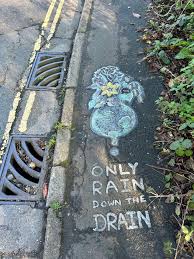
Only rain down the drain!

To kick off our winter series of talks on the environment and biodiversity we had Robert Hellawell of the Aire Rivers Trust talking about pollution in Silsden Beck. In a talk which ranged much wider than just the beck he told us something which surprised and shocked many of the audience. That is that much of what we tip down the drain goes straight into rivers without ever visiting the sewage farm. Read on to find out more…..

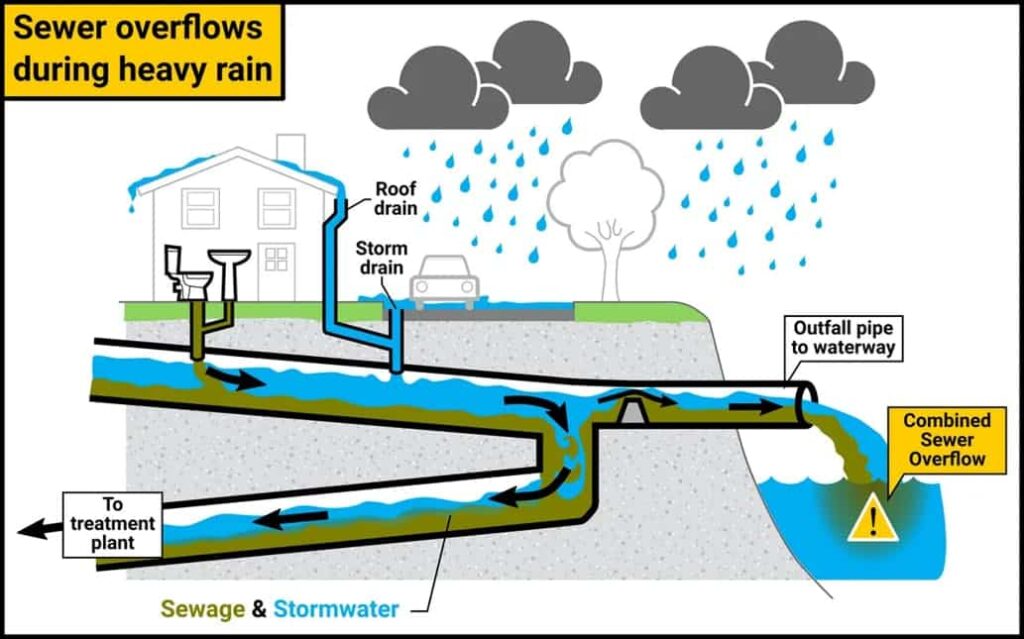
In the 1930’s there was a change in the way we dealt with sewerage and rainwater. Prior to that we had a combined sewer system, rain water from gutters and road run off etc was drained into the sewers along with foul water from houses, this all ended up at the sewage works. The problem was that in periods of high rainfall the works could not cope with the flow and there was a danger of the whole lot backing up with smelly results in houses and streets. To overcome this during heavy rain the overflow was allowed to go into the river untreated, not very satisfactory but less smelly!

diagram of combined sewerage system
Layout of combined sewerage system showing overflow in heavy rain.

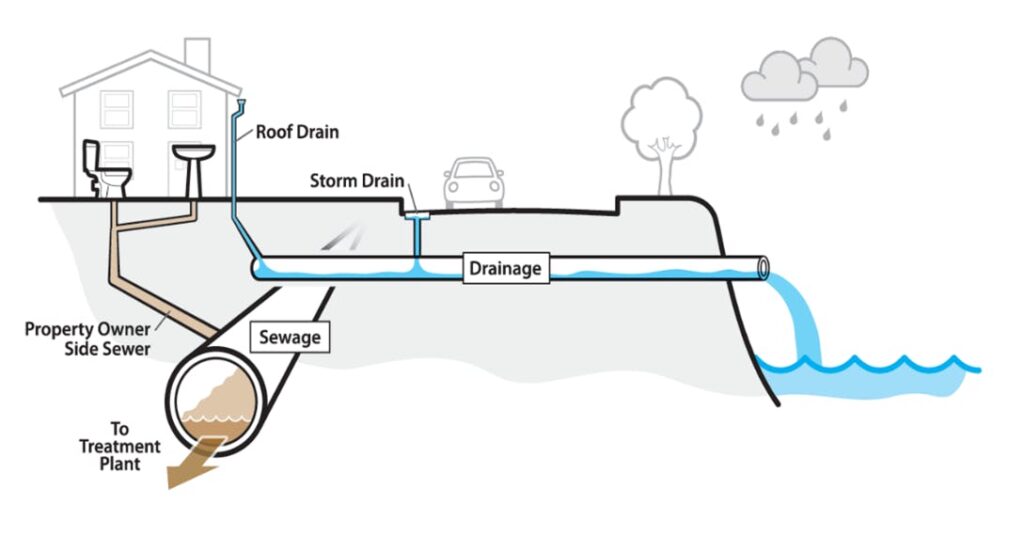
In the 30’s system was changed for new housing, so that rainwater run off was treated separately to foul water, known as a separate sewage system. If you live in a post 30’s house you should notice that the down pipe from your gutter goes into a different drain to the water from kitchen sink, toilet etc. The drain for surface water, from roofs, gutters and hard standing etc, is fed directly into the nearest river or the sea, as is the water from road gullies. This means that there should not be the overflow problem they had with the combined sewer system.

Diagram of seperate sewerage system
Layout of seperate sewerage system.

However there can be other issues, and this is what the surprise was from Roberts talk. There are two possible issues with the seperate sewerage system:

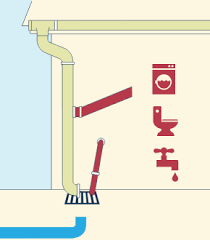
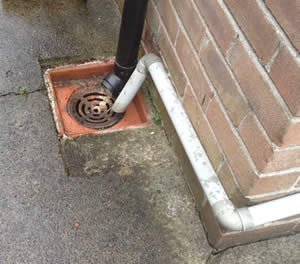
  • Incorrect building or home improvements can lead to what are known as misconnections, where foul water is directed into the surface water drain. For instance a bathroom or utility room extension is built  and the water from the bath, basin, washing machine etc is plumbed into the surface water drain by accident or because it is the most convenient. All that foul water will go directly into the river.

Testing by the Environment Agency shows an increase in phosphate levels in Silsden beck. This could be caused by pollution from misconnections, outflow from sinks, washing machines, dishwashers etc is usually high in phosphates.

Diagram of misconnection.
Typical misconnection photographed in Silsden. Gutter down pipe and washing machine drain pipe both going to surface water drain.
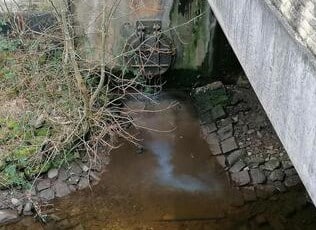
Milky outflow into Silsden Beck at Clog Bridge, typical of misconnection.
Discharge into Bradley beck
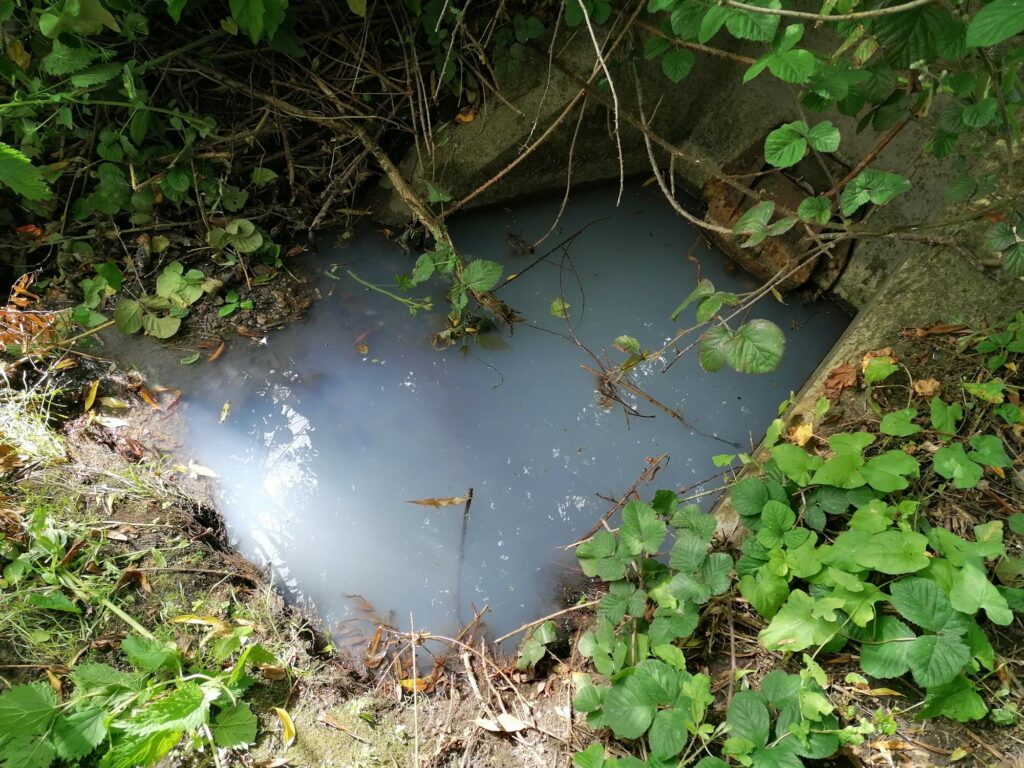
Frequently recurring mIlky discharge into Bradley Beck.
  • As many people do not understand the system they may direct polluting liquids into the surface drain. This could be when washing the car, that run off going across the road will end up in the river. People sometime think they are doing the right thing pouring stuff down the drain, old paint, white spirit from washing out paint brushes, used oil and so on.  All this will go straight into the river with a separate sewer system.
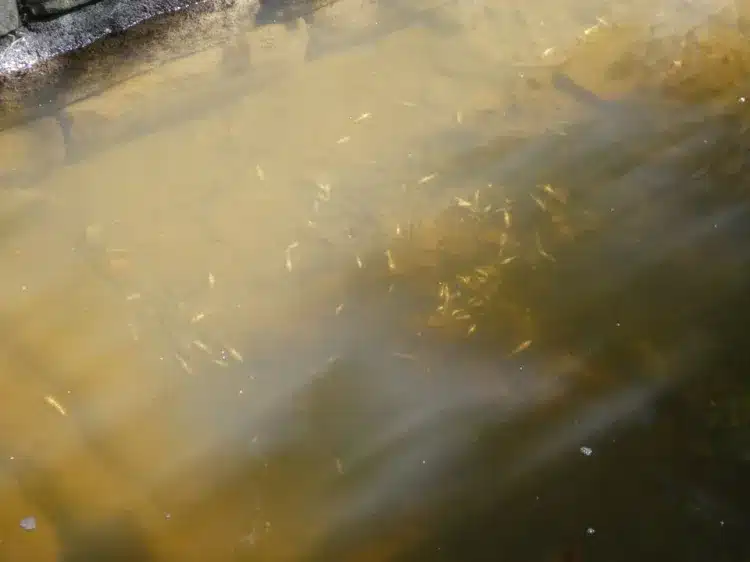
Dead minnows in Silsden Beck resulting from chemical pollution from surface water drain.

A couple of years ago there were a number of pollution incidents in Silsden Beck resulting in repeated fish kills at the lower end. This was eventually traced to chemicals being poured into the surface water drain.

Roberts advice on this issue is to follow the mantra “Only Rain Down the Drain”. This means we must give more thought to what we do with our waste liquid rather than just assume it will be dealt with by the system.

Some help to decide if you have a misconnection on your property can be found at two websites:

https://www.water.org.uk/developers/plumbing-and-drainage-misconnections

and 

https://www.yorkshirewater.com/your-water/misconnections/

When engaging a plumber it’s worth checking the “Water Safe” list of plumbers who have accreditation, much  like “Gas Safe”. They are less likely to instal a misconnection

We should never pour noxious liquids down the drain (including road gullies), better to keep them in a slops can and dispose of them at the Household Waste Recycling Centre. Always be conscious of where the foamy run off goes when washing anything out doors.

From Bristol Avon Rivers Trust.

Zero waste Info

Energy Info

Transport Info

Biodiversity Info